About the Conference
The International Human Science Research Conference is a multidisciplinary academic conference focused on qualitative research, particularly on phenomenological and hermeneutic perspectives.
Every year, the conference is organized by professors and students from various universities worldwide. Last year's conference took place in Roskilde, Denmark. This year, it is being organized with great pleasure in Montreal (Canada), by the Humanist Section of the Psychology Department at the Université du Québec à Montréal.
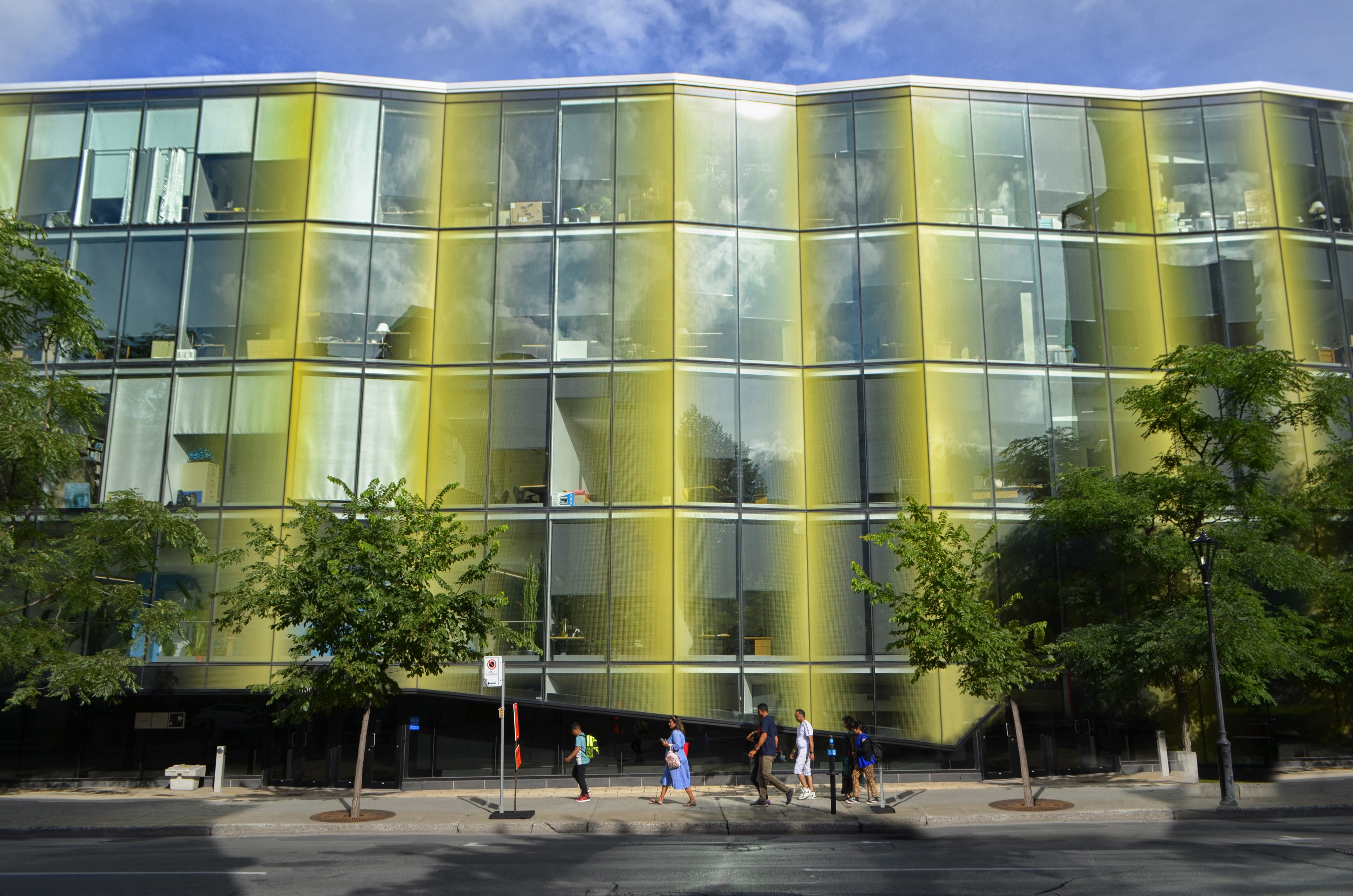
Our department
Our department was established in 1969 with the official opening of the University. Back then, the 12 professors helped train the 138 students enrolled at the time. Today, the department includes 69 professors whose expertise is recognized beyond Canada’s borders. They are grouped into nine areas of specialization that structure the three doctoral profiles: research, clinical, or both.
The department offers a wide range of academic programs, including bachelor's and certificate programs, a direct-entry doctoral program (the first of its kind to be launched in Quebec in 1989), as well as two graduate diplomas (DESS) in the fields of intellectual disabilities and autism spectrum disorders. In 2014, the department added a short graduate program in perinatal psychology, humanistic and psychodynamic approaches, and in 2025, another graduate program (DESA) in art therapy. We now train more than 630 undergraduate students and more than 500 graduate students.
Finally, the department is uniquely structured into nine sections, each defined by its specific approach or area of study. Each section reflects a particular field of research or practice in psychology, and each professor is affiliated with a section based on their main area of expertise. This section-based structure fosters synergy in resources and achievements across the various specialties represented. It thus provides optimal physical and intellectual environments for professors and students who share a common academic, scientific, and professional interest.
The Humanistic section
Our section is unique in Canada: it stands out by offering an approach to psychology grounded in its roots through both European humanistic traditions (hermeneutics, phenomenology) and American ones (existential psychology, Gestalt). It owes much to professors Bernd Jager and René Bernèche, who greatly contributed to its intellectual and institutional development. The Humanistic section includes seven professors with diverse research profiles:
- Research on variables contributing to change in psychotherapy and on common factors;
- The study of the development of the therapist;
- Adult emotional development, including aging;
- End of life, palliative care, and grief;
- Creativity and art therapy;
- The hermeneutic model of art in the narrative exploration of experience;
- Somatic approaches in psychology;
- Self psychologies, Gestalt perspective, and intersubjective approaches.
The richness of these approaches allows for a reflection about the concrete experience of the existing being, that is, about one’s being-in-the-world. From this perspective, the human condition is viewed as one of being in relationship, and subjectivity is, by definition, understood as an intersubjective phenomenon. This conception of the human being significantly influences the section's approach to psychopathology, viewed as disturbances in relational bonds. Therefore, the healing potential also lies at the heart of the relationship.
The 2026 organizing committee
Doctoral students in psychology at Université du Québec à Montréal: Charlène Allaire, Marianne Bordeleau, Jean-Thomas Chouinard, Nicolas Hamann-Legris, Catherine Huard, Mathilde Imnhaus, Jean-Pascal Lafrance, Stéphanie Quevillon, Laurent Perreault, and the graduate psychologist David Dorais.
Professors in the psychology department at Université du Québec à Montréal: Sophie Boudrias, Valérie Bourgeois-Guérin, Marc-Simon Drouin, Christian Thiboutot, and Florence Vinit.
Professor in the Health Sciences department at Université du Québec à Rimouski: Dominique Girard.