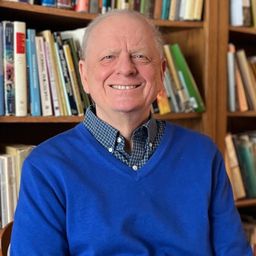
Paul Thagard is a philosopher, cognitive scientist, and author of many interdisciplinary books. He is Distinguished Professor Emeritus of Philosophy at the University of Waterloo, where he founded and directed the Cognitive Science Program. He is a graduate of the Universities of Saskatchewan, Cambridge, Toronto (PhD in philosophy) and Michigan (MS in computer science). He is a Fellow of the Royal Society of Canada, the Cognitive Science Society, and the Association for Psychological Science. The Canada Council has awarded him a Molson Prize (2007) and a Killam Prize (2013). His books include: The Cognitive Science of Science: Explanation, Discovery, and Conceptual Change (MIT Press, 2012); The Brain and the Meaning of Life ((Princeton University Press, 2010); Hot Thought: Mechanisms and Applications of Emotional Cognition (MIT Press, 2006); and Mind: Introduction to Cognitive Science (MIT Press, 1996; second edition, 2005). Oxford University Press published his 3-book Treatise on Mind and Society in 2019. In 2021, MIT Press published his Bots and Beasts: What Makes Machines, Animals, and People Smart? In 2022, Columbia University Press published: Balance: How It Works and What It Means. In 2024, Columbia University Press published Falsehoods Fly: Why Misinformation Spreads and How to Stop It. In July, 2025, Oxford University Press published Dreams, Jokes, and Songs: How Brains Builds Consciousness.
Sessions auxquelles Paul Thagard participe
Mardi 2 Juin, 2026
Thème : Philosophical and formal perspectives on reasoning and decision-making: coherence and abduction in reasoning and decision making



- Introduction
- Coherence versus probability in models of reasoning and decision making: Lessons from the new AI
- The place of logical abduction in the cognitive sciences
- Abduction and creativity: The Eco-cognitive foundations of hypothetical reasoning
- Reasoning with conditionals: abduction and deduction
- Panel de la session
Reasoning about what to believe is often analyzed using probabilities, while reasoning about what to do combines probabilities with utilities. A systematic alternative is provided by coherence theories of belief and decision, in ways that are more psychologically plausible and computationally efficient than probabilities. Nevertheless, powerful new AI models seem to use neither probability or coherence. What does their success tell us about rational thinking?Référenc...